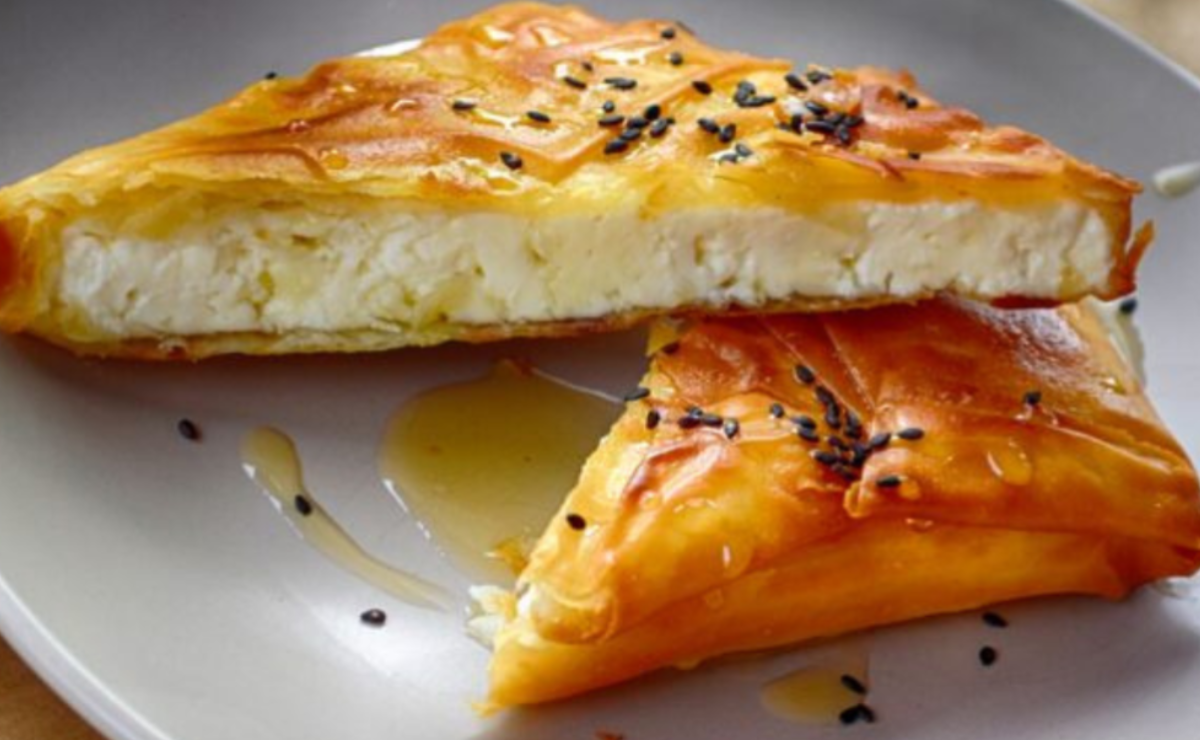
Both cheese pie and spinach pie are an integral part of Greek cuisine. There is a common perception that they are a healthy way of eating. Are they?
Consumption of cheese pie and spinach pie
Conclutions
- Cheese pie and spinach pie are traditional foods of Greek cuisine.
- As foods, they are a good source of calcium and Omega-3 fatty acids.
- A serving of cheese pie and spinach pie contains many calories and, depending on the cooking method, it can contribute to obesity.
Historical view
Both cheese pie and spinach pie are integral parts of the Greek diet. There is a general perception that they represent a healthy way of eating. Cheese pie is a good source of calcium, containing 140 – 200 mgCa per 100gr., while spinach pie is considered a good source of Omega-3 fatty acids, with a concentration of 0,89 mg/g of wet weight[1].
However, in 2011, the Ministry of Health attempted, through a draft law, to ban cheese and spinach pies from school canteens. This initiative was part of a broader effort that began in 2006 when the Ministry of Health added the fight against obesity to its agenda.
There was strong opposition to the 2011 draft. Particularly from the School Canteen Association, since the highest demand in school canteens is for pies and juices. According to the president of the Association of Canteen Operators of Public and Private Schools in Thessaloniki, Stefanos Fakoudis[2], this would have created a problem for the 7,500 – 8,000 Greek families operating canteens.
The association argued that removing pies would drastically reduce sales and cause many canteens to shut down. The economic crisis had already impacted the industry, as 2010 ended with a 40% drop in turnover, given that many students began bringing food from home. Children do not prefer yogurt and fruits, which also have a low-profit margin.
The biggest issue with banning these 2 products (and similar ones) is that they are traditional Greek foods, and for cultural reasons, authorities are hesitant to prohibit them.
A characteristic excerpt from an article written by Professor Antonia Trichopoulou, Professor of Nutrition and Preventive Medicine at the University of Athens, notes.
“It should be emphasized that the scientific evidence demonstrating the benefits of the Mediterranean Diet pertains to the traditional Mediterranean Diet and not the current eating habits of Mediterranean countries. In this context, we need to shape policies aimed at preserving this excellent dietary model. Traditional Mediterranean foods are a timeless expression of our cultural heritage. Despite globalization, many traditional Mediterranean foods have centuries of history and have left their mark on the modern Mediterranean way of eating. It is essential to legislate and standardize the production of traditional foods so that the products, producers, and consumers are protected”.
Professor Trichopoulou also conducted a study on the nutritional value of greens in the final product, that is, in herb pies and mini herb pies. She concluded that these two foods are rich in protein and dietary fiber.
The Institute for Nutritional Studies and Research (INMER) also expressed reservations about the bill. INMER’s main position is that if these foods are prepared using proper methods, obesity will not be a concern. They proposed setting standards and conditions in such a way that bakery companies could become more competitive by producing healthier products, thus, avoiding bans and preserving these items in the Greek culinary tradition.
Cooking
Cheese pie generally contains 3 main ingredients: phyllo dough, cheese, and olive oil.
In Greece, the filling is typically based on feta cheese, but one can also find versions made with kasseri or mizithra cheese, yogurt, and egg.
The cheese gives it a salty flavor. Olive oil (e.g. extra virgin) is used between the layers of dough. Dairy products rich in calcium enhance their nutritional value, while olive oil adds extra calories.
Below is the nutritional values per 100 g for some indicative ingredients:
| Ingredient | Traditional | With puff Pastry |
| Energy(calories) | 380 kcal | 423 kcal |
| Protein | 11.3 g | 13.1 g |
| Carbohydrates | 46.7 g | 45.2 g |
| Fat | 23 g | 27.4 g |
| Saturated | 50.1% | 54.1 % |
| Cholesterol | 31.6 mg | 29.2 mg |
| Calcium | 52 mg | 72 mg |
| Potassium | 127 mg | 102 mg |
| Sodium | 618 mg | 571 mg |
| Phosphorus | 392 mg | 457 mg |
It is important for someone to know the ingredients used in each dish and how it is prepared. There are countless variations in pies. The differences lie mainly in the type of pastry and the filling, which results in the cheese pie “kourou”, the puff pastry pie, and the mini cheese pie having different calorie calories.
| Type of Pie | Calories per Piece (Serving) |
| Milk Pie | 280 |
| Ham and Cheese | 324 |
| Zucchini Pie | 280 |
| Chicken Pie | 283 |
| Meat Pie | 360 |
| Steamed Cabbage Pie | 60 |
| Apple Pie | 360 |
| Meat Burekakia | 170 |
| Cheese Burekakia | 160 |
| Potato Pie | 330 |
| Meat Piroshki | 350 |
| Spinach PIe | 330 |
| Cheese Pie | 340 |
| Jam Pies (1 small) | 180 |
| Leek Pie | 330 |
| Cheese Puff (1 small) | 160 |
| Spinach Pie | 330 |
| Fried Meat Pie with Beef or Pork | 260 |
| Cheese Pie* | 340 |
| Vegetable Pie without Cheese | 302 |
Conclusions
- The type of pastry plays an important role in the caloric content.
- The cheese filling can change its nutritional profile.
- The “kourou” cheese pie has significantly fewer calories than the puff pastry version.
- As shown in the first table, the issue with pies is not just the calories per 100 grams, but mainly the content of saturated fats. Some consumers might argue that with just a few grams they get enough energy, so they won’t feel hungry or need a second meal. The counterargument to this is the high ratio of saturated fat to provided calories.
Current Situation
The prevailing solution is to prepare these foods with the appropriate ingredients and methods, so they can also be considered nutritious. Since 2016, the unified Food Control Authority (EFET) allows [3] the sale of cheese–vegetable pies in individual 120-gram portions, under specific requirements:
-
The fat used for the dough must exclusively be olive oil.
-
The final product should not exceed 30% total fat and 0.1% trans fats.
-
The cheese used in cheese pies must make up at least 40% of the total weight.
-
Traditional and Greek cheeses with protected designation of origin are recommended.
-
The use of processed (melted) cheese is prohibited.
Beyond cheese pies and spinach pies, EFET also allows the sale of other foods that, no matter how healthy they are prepared, contribute to obesity: sweets, cereal bars, and pizzas.
Approach
Outside School
Spinach is rich in fiber and an excellent source of many vitamins and minerals such as vitamin Α, vitamin C, vitamin Κ1, Β- complex vitamins, iron, calcium, manganese, and magnesium.
One cup of boiled spinach more than meets the daily requirements of our body for vitamins Α and Κ. It is also ideal for our figure since 100 grams provides only 23 calories. So, instead of eliminating it from our diet, we can consume it as a full meal.
Inside School
We understand that students should have the freedom to choose the food they prefer. Even if we ban the sale of cheese and spinach pies in our school canteens, students can still obtain them outside of school.
Nevertheless, we must inform parents about how these foods contribute to obesity in general and childhood obesity in particular. Through blog articles and the Noutree app, we have highlighted the problem caused by the consumption of such foods. It is also up to parents to inform and educate their children accordingly.
The products offered in our school canteens are fully aligned with the requirements of the relevant Government Gazette FEK and the current legislation governing the items sold in school canteens.
In consultation with the organization managing our canteens, the types of pies available are entirely free of preservatives or emulsifiers deemed harmful to health, while the added fats come mainly from sunflower oil, cottonseed oil, palm oil, and extra virgin olive oil. As a result, the levels of saturated fatty acids remain lower than those of comparable products available in the open market.
In fact, all products have a trans-fat content (τwhich has been widely characterized as harmful to health) of less than 0,01% and fully comply with European regulation (ΕU) 2019/649.
Furthermore, they do not contain flavor enhancers or other substances intended to provide an “intensely pleasant taste” to the end consumer, which in turn drastically increases daily salt intake, something linked to health issues such as cardiovascular disease, stomach cancer, and high blood pressure.
The reality is that, no matter how some traditional Greek foods like pies are prepared, they will continue to be high in calories and saturated fat. Anyone who claims otherwise only needs to wear a glucose sensor and observe their glucose levels 1 to 3 hours after consumption.
Sources
[1] (Macro- and Micronutrients in a Traditional Greek Menu, Forum Nutr. Basel, Karger by Trichopoulou et al 2005)
[2] makthes.gr, Σχολικά κυλικεία: Αντιδράσεις για τον αποκλεισμό της… τυρόπιτας, 2011
[3] Καθορισμός των αναγκαίων συμπληρωματικών μέτρων για την εφαρμογή των Κανονισμών (ΕΕ) αριθ. 1308/2013 του Ευρωπαϊκού Κοινοβουλίου και του Συμβουλίου (ΕΕ L 347 της 20.12.2013, σ. 671), (ΕΕ) αριθ. 247/2016 της Επιτροπής (ΕΕ L 46 της 23.2016, σ. 1) και (ΕΕ) αριθ. 248/2016 της Επιτροπής (ΕΕ L 46 της 23.2016, σ. 8) σχετικά με την υλοποίηση του προγράμματος προώθησης της κατανάλωσης φρούτων και λαχανικών στα σχολεία